The People You'd Never Pick: How the Wrong Collaborator Might Make Your Best Work
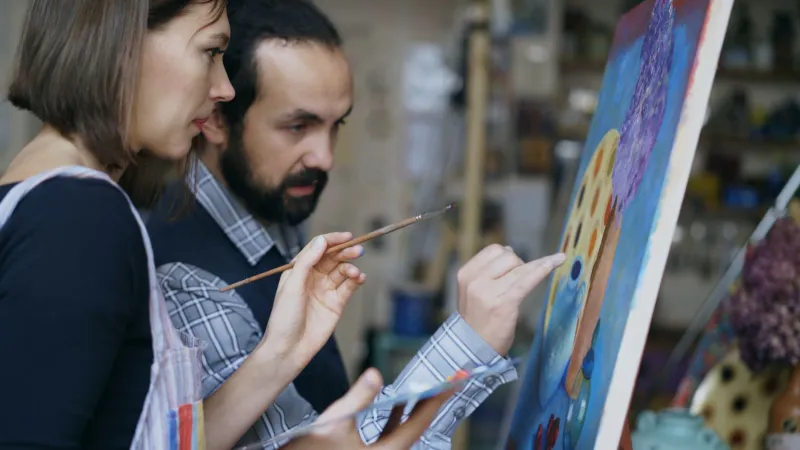
There's a version of creative collaboration that looks really good on paper. Same aesthetic sensibility. Overlapping references. A shared shorthand that makes the whole process feel effortless. You finish each other's sentences. The mood board practically builds itself.
And sometimes, the work that comes out of it is just... fine.
Not bad. Not embarrassing. Just smooth and competent and completely forgettable — the creative equivalent of a meal you can't remember eating two hours later.
Then there's the other kind of collaboration. The one that starts with friction. Where you can't agree on the direction, where someone keeps poking holes in your favorite ideas, where you leave the first few sessions feeling vaguely annoyed and slightly misunderstood. Where you find yourself thinking, why did I even agree to this?
And sometimes — not always, but often enough that it's worth paying attention to — that's the one that produces something you couldn't have made alone.
Why We Keep Choosing the Comfortable Version
It makes total sense that we gravitate toward people who already get us. Creative work is vulnerable. Sharing half-formed ideas with someone who speaks your language feels safe in a way that's genuinely useful, especially early in a project when everything is still fragile and undefined.
But there's a trap buried in that comfort. When two people share the same instincts, they also share the same blind spots. The things neither of you would think to question — your default pacing, your visual habits, the structural choices you make without even realizing you're making them — stay invisible. Nobody challenges them because nobody notices them.
You end up reinforcing each other in ways that feel supportive but are actually just... circular. The work gets polished, but it doesn't get pushed.
Unlikely collaborators don't have the same blind spots. They trip over the things you stopped seeing years ago. And that tripping — as aggravating as it can be in the moment — is often where the interesting stuff lives.
The Psychology of Creative Resistance
Here's what's worth naming directly: the resistance you feel toward a challenging collaborator is almost never really about them.
When someone questions your instincts, it doesn't just feel like creative disagreement. It feels like a small threat to your identity as a creative person. Your methods, your taste, your way of doing things — those aren't just tools. They're part of how you understand yourself. Someone poking at them can feel weirdly personal, even when it isn't.
This is why the impulse to dismiss difficult collaborators is so strong and so fast. It's easier to decide they just don't understand your vision than to sit with the possibility that their confusion might be pointing at something real.
The artists who consistently do their most interesting work tend to have developed a tolerance — sometimes even a genuine appetite — for that discomfort. They've learned to distinguish between friction that's just personality clash and friction that's actually productive creative pressure. The first kind is worth walking away from. The second kind is worth leaning into, even when everything in you wants to bail.
What Unexpected Pairings Actually Produce
Think about some of the most surprising creative partnerships in entertainment and art. The ones that looked bizarre from the outside — different genres, different generations, wildly different aesthetics — but produced something that neither person could have made on their own.
What tends to happen in those pairings isn't that the two people meet in the middle and average out their differences. It's that the friction between their approaches forces both of them to articulate things they'd never had to articulate before. To defend choices they'd always just made on autopilot. To find language for instincts that had always lived below the surface.
That process of articulation changes the work. It makes it more intentional, more specific, more alive. You stop defaulting to your habits because your collaborator keeps surfacing them and asking why. And sometimes the answer to why is genuinely good — it holds up under scrutiny and gets stronger for being examined. But sometimes the answer is just because I've always done it this way, and that's the moment where something new becomes possible.
The Career-Defining Project You Didn't See Coming
There's a pattern that shows up again and again when creative people talk about the work they're most proud of. It often wasn't the project they were most excited about going in. It wasn't the one that felt like a natural fit. It was the one that surprised them — sometimes the one they almost turned down.
The unexpected collaborator is part of that story more often than people give credit for. Not because difficulty is inherently valuable, but because the right kind of difficulty — the kind that comes from genuine creative difference rather than incompatibility — forces you out of the grooves you've worn into your own process.
You can't coast when someone keeps asking questions you don't have easy answers to. You can't rely on your usual moves when your collaborator doesn't share your frame of reference and keeps responding in ways you didn't predict. It's destabilizing, and it's also, weirdly, generative.
How to Actually Work With Someone Who Challenges You
This isn't a pitch for suffering through bad creative dynamics in the name of growth. Toxic collaboration is just toxic, and romanticizing it doesn't make the work better.
But if you find yourself in a partnership that's uncomfortable for reasons that feel more like creative tension than genuine incompatibility, a few things tend to help:
Slow down before you dismiss. When a collaborator's feedback or direction frustrates you, give yourself a beat before reacting. Ask what specifically is bothering you. Is it the idea itself, or is it that the idea challenges something you assumed was settled?
Get curious about their confusion. When someone doesn't understand a choice you thought was obvious, resist the urge to just explain harder. Ask what they're seeing instead. Their misread might contain something.
Name the discomfort out loud. Sometimes just saying this is uncomfortable for me and I'm not totally sure why opens up a conversation that makes the collaboration more functional. It's less about processing feelings and more about clearing the air so you can actually work.
Let the project be different from what you planned. The best version of an unexpected collaboration usually doesn't look like your original vision. It looks like something neither of you could have predicted. That's not a failure of vision. That's the point.
The Takeaway
Your best collaborators might not be the people who already love what you love. They might be the ones who make you explain yourself, who see your work from an angle you can't access alone, who push back on the things you thought were settled.
That's not comfortable. But comfort, as it turns out, is a pretty mediocre creative goal.
The work that lasts — the stuff people actually remember — tends to come from somewhere more interesting than easy agreement. It comes from two people who see things differently, deciding to make something together anyway.