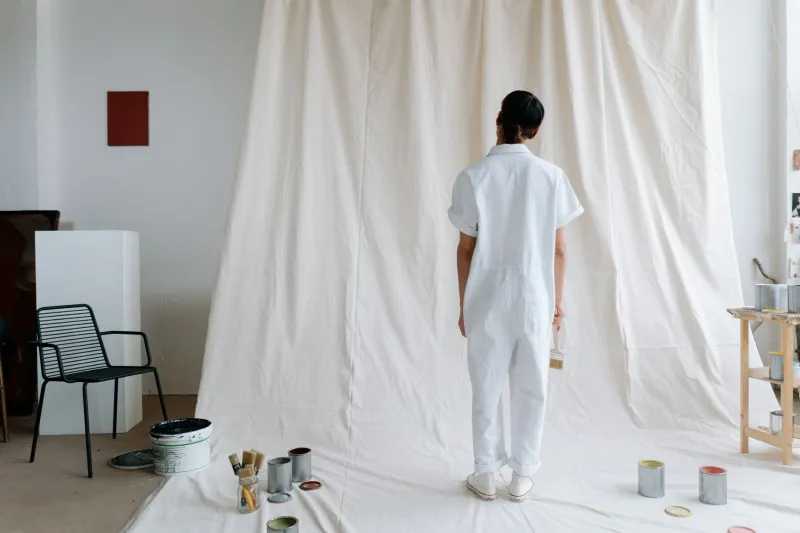
Same Voice, Different Room: What Happens When You Drag Your Audience Into a New Art Form
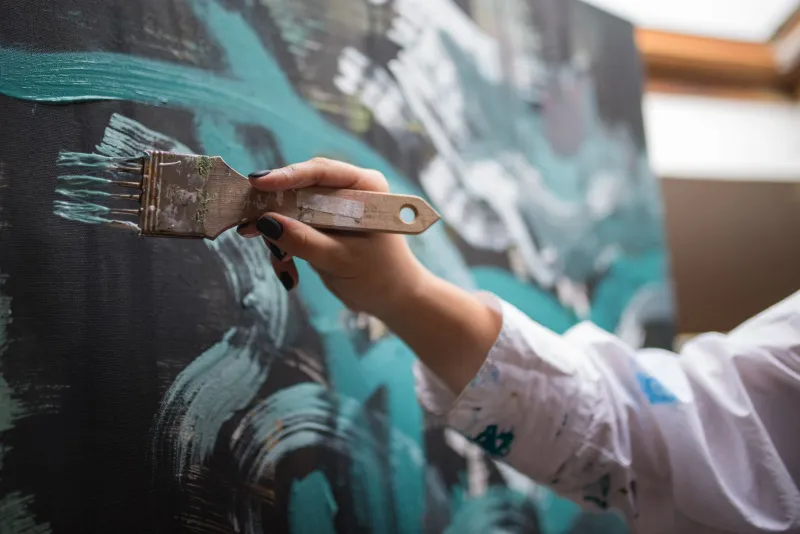
There's a specific kind of panic that sets in when you realize the thing you've been making for years isn't the thing you want to make anymore. Maybe you've been writing essays and suddenly you can't stop thinking in scenes and camera angles. Maybe you've spent a decade building a music catalog and now you're obsessed with the idea of a podcast. Maybe your visual art practice has quietly started feeling like a warm-up for something louder, something live.
Whatever the shape of it, the pivot moment is real. And the question that follows — what happens to the people who came for the old thing? — is one of the most loaded questions in any creative career.
Let's talk about what medium-switching actually looks like, because the Instagram posts and the "exciting announcement" energy rarely capture the full picture.
The Loyalty Myth
Here's something nobody really wants to say out loud: your audience is loyal to the feeling you give them, not necessarily the format. That's both great news and complicated news.
The great part? If someone has been reading your essays for three years because your writing makes them feel seen, there's a decent chance they'll follow you into a documentary, a stage show, or a podcast — because what they're actually addicted to is your perspective. Your voice. The specific way you move through ideas.
The complicated part? Format is how that feeling gets delivered. And when you change the delivery system, some people can't make the translation. A reader who loves your long-form prose might genuinely struggle to connect with you on camera. A listener who found you through music might not have the patience for an hour-long conversation episode. That's not a betrayal on their part. It's just the reality of how different mediums create different kinds of intimacy.
So before you announce your big pivot, it's worth sitting with this: some portion of your current audience will not come with you. That's not failure. That's physics.
What Gets Lost in Translation
Every medium has its own grammar. When you switch, you're not just learning new tools — you're learning a new language. And in the early stages, you're going to sound like someone who's fluent in Spanish trying to speak French. Technically related. Still obviously foreign.
A novelist who moves into screenwriting often loses the thing that made their prose electric — the internal monologue, the layered description, the slow build of a sentence. Film doesn't have time for that. Film is exterior. It's behavior and image and what's not said. The transition requires a kind of creative amputation, and it takes a while to learn how to walk without that limb.
A visual artist moving into performance discovers that the stillness that makes a painting breathe becomes discomfort when it's a body standing in front of a live audience. The rules of composition don't transfer. The audience's patience is different. Time works differently.
And a musician who starts podcasting often underestimates how much the structure of a song — the verse, the chorus, the hook — has trained both them and their listeners. Conversation doesn't resolve the same way. It wanders. It doubles back. Some musicians thrive in that looseness; others find it genuinely destabilizing.
None of this means you shouldn't make the switch. It just means you need to budget time for feeling bad at something before you get good at it. And you need to be honest with your audience about where you are in that learning curve.
What Comes Through Anyway
Here's the thing that consistently surprises people who make successful medium pivots: the core of what they do tends to survive the move better than they expected.
There's a reason certain filmmakers have an unmistakable visual signature across every project even when the genre shifts entirely. There's a reason some writers can move between essays, novels, and screenplays and still sound like themselves. The medium changes. The sensibility doesn't — or at least, it doesn't have to.
Your obsessions follow you. The questions you keep asking, the textures you're drawn to, the emotional territory you return to again and again — those don't evaporate because you picked up a camera instead of a pen. They just find new ways to show up.
This is actually one of the most compelling arguments for telling your existing audience about the switch rather than trying to quietly build a second separate presence. Because the people who are genuinely invested in you — not just the artifact you've been producing — will recognize you in the new work. Maybe not immediately. But eventually.
The Strategic Side of the Transition
Okay, so you've decided you're doing this. You're making the move. Here's where it gets tactical.
Don't disappear. The worst thing you can do is go dark on your existing platform while you're learning the new one. Your audience will assume you've quit. Keep showing up in the spaces where they already know you, even if it's just to document the transition itself. That documentation — the behind-the-scenes of you learning a new craft — is often more compelling content than either the old work or the new work.
Bridge the gap explicitly. Don't make your audience guess what's happening. Talk about the pivot. Explain why the new medium is calling to you. People are remarkably willing to follow someone into unfamiliar territory when that person is honest about what they're chasing and why. The mystery of an unexplained shift is what creates distance.
Give the new medium time before you judge the response. Audience behavior in a new format takes longer to develop than most people expect. Your first ten podcast episodes are not a representative sample. Your first short film is not the full data set. Give yourself a real runway before you start interpreting low engagement as rejection.
Let some of the old work continue to exist. You don't have to delete your essays because you're making films now. You don't have to stop releasing music because you've fallen in love with live performance. The catalog you've already built can keep working for you — introducing new people to your world — even as you're building something new.
The Part Nobody Talks About
There's an emotional cost to medium-switching that doesn't get discussed enough. When you've spent years developing mastery in one form, starting over in another form means being a beginner again. Publicly. And if you've built any kind of audience, that beginner-ness is visible in a way it wasn't when you were just starting out.
That vulnerability is real. It's also, weirdly, one of the most interesting things you can offer the people who follow your work. Because watching someone choose discomfort over stagnation — watching someone risk looking foolish in pursuit of the work that actually excites them — is genuinely inspiring. It's the kind of thing that makes an audience feel like they're watching something true.
Same voice. Different room. The room changes everything, and nothing at all.